Today I’m going to do a deep dive on how avoidants tend to sabotage relationships.
Now, there’s a long answer to this and a short answer. I suppose, since we live in the day and age of “tik toks” and “shorts” I should probably start with the short answer.
Avoidants sabotage their relationships largely for two reasons. Their need to maintain their independence and their inherent childhood wound. They typically come up with all kinds of deactivation strategies to keep their partners at an arms length. These strategies range from things as simple as a reluctance to commit to as complicated as intermittent reinforcement.
Yet, only taking a snapshot explanation of this tends to leave a lot on the table. If you are up for the long answer I’ll be covering things like,
- The two layers behind why avoidants sabotage their relationships
- When they begin to sabotage their relationships
- A quick look at the most common deactivation strategies
- If an avoidant who self sabotages can ever be secure
Let’s begin!

What Are Your Chances of Getting Your Ex Boyfriend Back?
Take the quizWhy Do Avoidants Sabotage Their Relationships?
To answer this question I’d actually like to talk about this graphic,
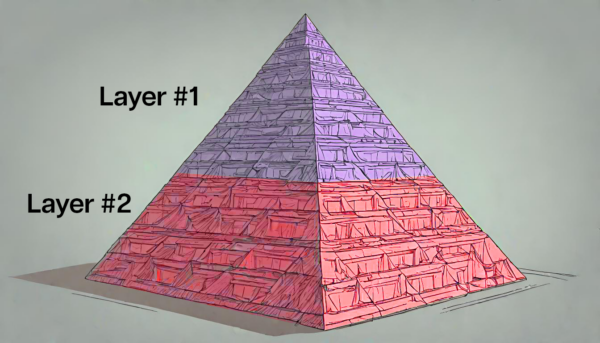
There are actually two layers to why avoidant sabotage their relationships,
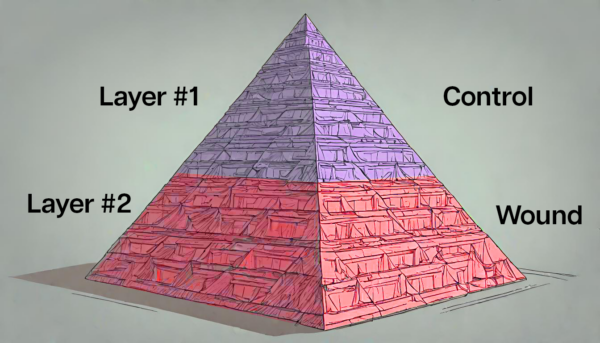
- Layer #1: Control
- Layer #2: Childhood Wound
Let’s take a moment to go in-depth with each.
Surface Layer: Control
Individuals with an avoidant attachment style often fear intimacy due to their reliance on self-regulation over co-regulation.
This means they prefer to manage their emotions independently rather than seeking support from others.
Instead of turning to people for emotional processing and comfort, they engage in routines and activities that allow them to alter their mood without discussing their feelings with someone else. This approach is a key characteristic of their attachment style, where they maintain emotional stability through controlled, solitary means rather than through shared emotional experiences.
This self-regulation strategy is often misunderstood. It’s not that avoidant individuals consciously choose to avoid seeking support; rather, they have learned over time not to rely on others for emotional regulation.
Their lives are structured around routines and plans that provide a sense of control and stability. For example, an individual might follow a strict morning routine of exercise, meditation, and a healthy breakfast to maintain a controlled environment.
These routines are crucial for their emotional stability, allowing them to anticipate and manage their feelings throughout the day.
This structured approach to emotional regulation is a fundamental aspect of how they navigate their emotional world.
Layer One: Childhood Wound
From a young age, typically under two years old, individuals who develop an avoidant attachment style often experience rejection of their emotional needs by caregivers.
This can manifest in various ways, such as a parent dismissing a child’s tears with remarks like “Boys don’t cry, man up,” or more subtly, by not responding adequately to the child’s emotional expressions of sadness or need.
A parent with an avoidant style might give positive attention when the child is happy but withdraw or try to change the child’s mood during vulnerable moments. This avoidance stems from their discomfort with their own vulnerable emotions, leading them to reject similar emotions in their child.
As a result, the child learns to associate vulnerability and emotional needs with negative responses, like disgust. This response becomes an unconscious part of their psyche, leading them to feel self-disgust whenever they experience their own vulnerabilities.
They are conditioned to believe that showing vulnerability will lead to rejection or disgust, a belief that deeply influences their emotional interactions and attachment style in adulthood.
When Do They Begin To Sabotage A Relationship?
Well, I think the answer to this is pretty simple: it is ultimately when their core wound gets triggered.
I’ve talked a lot about core wounds in the past.
What Are Your Chances of Getting Your Ex Boyfriend Back?
Take the quiz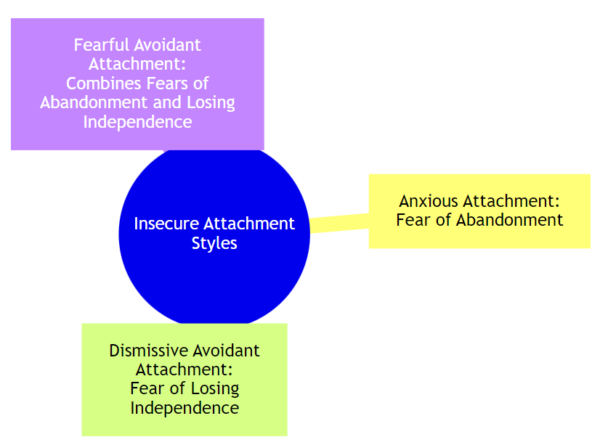
Ultimately, I always like to distill very complicated concepts in attachment theory down to simple core wounds.
So, what exactly is a core wound?
It’s something that happens to an avoidant, either internally or externally, that triggers them to put up walls or engage in some sort of coping mechanism where they start pushing you away.
This core wound for a dismissive avoidant usually revolves around a fear of losing their independence. I’ve talked about that extensively in this video,
We’ve even sowed the seeds of this idea in the first section of this article when we were talking about the surface layer of control.
A significant reason they want to maintain control is their preference to manage emotions independently, rather than seeking support from others. This really comes down to that core wound. For them, needing help from others is akin to admitting defeat.
Dismissive avoidants, in particular, are very into this idea of self-sufficiency. There’s this great quote in “Attached,” one of my favorite books on attachment theory, that says avoidants mistake self-reliance for independence, and there’s a difference between the two.
That really plays into that core wound.
So, an avoidant sabotages a relationship usually when they start feeling their partner is intruding upon their independence. These behaviors are rooted in the avoidant’s childhood experiences, especially those involving very dismissive parents or a lot of rejection from their primary caregivers.
However, it’s worth noting that fearful avoidants will sabotage relationships a lot as well.
It’s just that you get sort of two for the price of one with them.
While the dismissive avoidant essentially has one core wound, which is triggered by anything that makes them feel as if they’re about to lose their independence, a fearful avoidant has two core wounds.
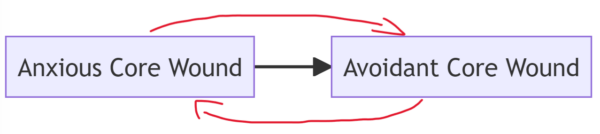
They have the dismissive core wound about independence and the anxious core wound about the fear of being abandoned.
For a fearful avoidant, they can begin sabotaging a relationship when any of those core wounds get triggered. This is why fearful avoidants are much more likely to act very erratically and exhibit hot and cold behaviors, because they have these two core wounds, creating a constant war within themselves.
But let’s loop back and talk a bit more about the dismissive avoidant attachment style, specifically in relation to some of the common deactivation strategies they go through.
The Most Common Deactivation Strategies
In their book, Attached, Amir Levine, M.D., and Rachel S.F. Heller, M.A. talk about the avoidant individuals preference for something called a deactivation strategy.
(And no the link above is NOT an affiliate link. I actually think it should be required reading to anyone who is interested in attachment theory.)
So, what the heck is a deactivation strategy?
I’m pulling straight from the book with this one,
A deactivation strategy is any behavior or thought that is used to squelch intimacy.
In other words, deactivation strategies are the specific tools that an avoidant will use to sabotage intimacy. There are quite a lot of them,
- Reluctance to Commit: They might say or think things like “I’m not ready to commit,” even if they’ve been in a relationship for a long time. This indicates a fear of deeper engagement in the attachment dynamic.
- Focusing on Imperfections: They often pick on small imperfections of their partners, such as their dressing style, way of talking, or habits. This nitpicking is a defense mechanism to maintain emotional distance.
- Longing for an Ex: They may idealize a past relationship, viewing an ex-partner as the ‘one that got away’, despite the relationship being problematic.
- Flirting with Others: They might flirt with others to create insecurity and instability in their relationship, thus maintaining a safe emotional distance.
- Conditional Love: They may express love conditionally or struggle to say “I love you,” indicating a discomfort with deep emotional expression.
- Withdrawing During Good Times: They may pull away just when the relationship seems to be going well, as a means to reduce vulnerability.
- Seeking Relationships with Impossible Futures: They might engage in relationships that obviously have no future, such as with someone who is married, to ensure there’s no expectation of full commitment.
- Mental Disengagement: They could mentally check out during conversations, particularly emotional ones, as a way to avoid deep emotional engagement.
- Keeping Secrets and Being Vague: They might keep secrets or be intentionally vague about certain aspects of their life to maintain a sense of distance in the relationship.
- Avoiding Physical Closeness: They might avoid physical intimacy or even sharing the same bed, using various excuses to maintain this distance.
- Intermittent Reinforcement: Dismissive avoidants may exhibit hot and cold dynamics in relationships. They oscillate between feeling connected and then feeling scared by this vulnerability, leading to a pullback for self-protection.
Honestly there’s probably more deactivation strategies that aren’t listed above but I think the list above helps you understand the gist of what to keep any eye out for.
Can An Avoidant Who Self Sabotages A Relationship Ever Be Secure?
In 2021 I decided it might be a good idea to have an actual therapist audit my content. Specifically I wanted someone to take a look at my research on the no contact rule here and give me their thoughts.
What Are Your Chances of Getting Your Ex Boyfriend Back?
Take the quizThat’s when something interesting happened. The therapist who I tapped to take a look at it was amazing. Not only did they do a thorough job of critiquing but they gave some really great constructive criticism.
Here’s just a small excerpt of their critique via an email they sent me,
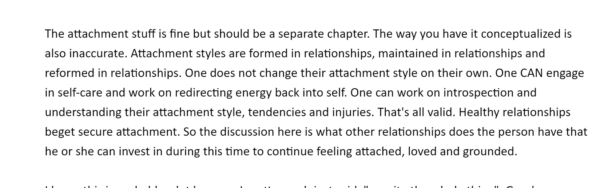
Of course, it’s been three years since I received that email and I’ve fully immersed myself in attachment theory since then.
And…. well, I’m not sure I agree with all the assertions made in it.
Specifically this part,
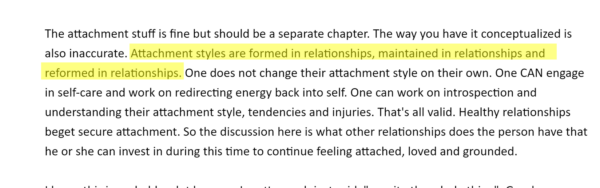
“Attachment styles are formed in relationships, maintained in relationships, and reformed in relationships.”
Now, I won’t disagree that this is largely true.
Attachment theory suggests that attachment styles are initially formed in early relationships with primary caregivers, typically in childhood. These styles can influence how individuals approach relationships throughout their lives.
However, it’s also recognized that attachment styles can evolve and be reshaped through significant relational experiences in adulthood.
New, healthy relationship experiences can contribute to a shift toward a more secure attachment style.
While it’s true that relationships play a crucial role in forming and potentially reforming attachment styles, individual work outside of relationships can also be significant.
Self-awareness, therapy, and personal development can lead to a better understanding of one’s attachment patterns and contribute to change. So, while relationships are key, individual effort and introspection are also important factors in this process.
I think having and black and white view can be dangerous.
Rather the correct answer is likely a combination of everything.
So, yes, I’m of the belief that it is very possible for someone who is an avoidant to become more secure. However, to make it seem like it’s an easy process would be a disservice to the reality.
I’ll frame it to you this way,
One does not simply undo years of childhood core wounds and coping mechanisms overnight.
Rather, it’s a long drawn out process with many peaks and valleys.
But it can be done.
Glenn Williams
March 19, 2026 at 8:23 am
G’day. This is very long and a tiny example of what its like living with a Fearful Avoidant and possibly Dismissive Avoidant combined and Not working it until over 40 years into the relationship. Its purely about the struggle the blaming the realisation. Your information is incredible. Its helpful but sadly its not. Trying to rationalise this is destroying my sanity. I know l am not the easiest person to be around and l know l have made the relationship challenging. I love and adore my wife. She intelligent thoughtful sharing dedicated respectful and after being together for over 40 years the most beautiful and desirable lady and nothing changes thst. l know above all else she loves me and we enjoy a life together. We both different things to the relationship yet we balance the way we share responsibilities. We all know life has a way of making us feel we are doing too much. Well. We both just do what needs to be done. WE ARE HAPPY and l know what my wife enjoys. We share time with others, we have independent interests, we volunteer committing as a couple and individually. We love time together and have fun and laugh with simple things and adventures. Now the hard bit. I have always felt guilty for enjoying sex sex l want to share with the only person l desire. We quickly worked out we had differences yet we were compatible and enjoyed our intimacy. It also didn’t take long before l started blaming myself for my failings to be thoughtful of my partner. We had a wonderful weekend after a particularly challenging month where l had worked so hard to achieve success but through severe life threatening injury l failed. The long weekend was wonderful, unfortunately l got food poisoning and blamed her silence and dissapointment on that. We made up after l apologised, soon finding a pattern. After l left her home one day feeling rejected her mother came out and said “She had trouble like this with her previous boyfriend” just what l needed. But l didnt realize what was being said. And l dont think she did as she was rather cold even to her children. I guess there’s the so called Core Injury most likely coming from parents who didnt like each other and 3 older brothers who treated her terribly. She always defends them. To save time l am sure we both did things we regret and sure we both have our secrets. But we both loved and love each other dearly and protected our relationship and cared for each other. My sadness, frustration and confusion came to a point where l was physically emotionally and mentally exhausted and it led to hurting myself. I would go to the gym and increase the weights the reps the times until something broke, a muscle a joint etc l would do work at home and volunteer doing physical tasks someone in their late 60s shouldn’t do but l would do it until l was exhausted and then until l hurt myself. My confusion and emotional pain was so severe PAIN was the only thing that seemed to keep me at bay. We were and ARE HAPPY. Free of most of lifes dramas, we are comfortable in our own home that we own. We live comfortably. To save time here is the most recent event. We had returned to an erratic sex life that she controlled. When, where how often style of sexual intimacy etc. I had given up a lot after 8 years of No sex and 18 months where the Therapist decided after 1 visit together it would be more helpful to Treat my wife alone. At the completion where l had never been given any feedback on the progress and asking what was the next step, were we making bookings to Couples and she replied NO. “If you can’t accept the way l am, you will have to leave” as you can imagine l was gutted. It was obviously all my fault and that what we had a long marriage with 2 wonderful children but it felt over because l longed for Intimacy and Yes SEX with the one person l desire. I turned around and asked what l could do to take the pressure off. No sex, no intimacy. Destroy intimate photos of her. These were lingerie bikinis a little peak but nothing anyone would see as Porn. They were admiration and Memories of Special times. This surprised me because l knew she kept and still has photos of past relationships that are highly intimate. I burned the collection of beautiful photos of my wife. She Thanked me. I went into Rehab to get off Pain Perscribed Pills and look into me and my problems tjat impacted the relationship. Even in the Couple meetings She was very critical and attacked. I did it, l git off them. It was such an important time yet she appeared more concerned because l was Home. To follow were years of getting changed in different rooms, going to bed at different times rarely hugging only pecks for kisses. A Dr suggested regular masturbation which angered me because l wanted Romance Intimacy and yes sexual intimacy. Masturbation is NOT a replacement its humiliating. Back to the event. Slowly She developed interest in me as l was genuine this was about Us. There seemed to be a shift when she fell into a dry creek bed with vines that made it difficult to get up. I noticed she had put her foot through a European Wasp nest. They are particularly nasty and people had died with as few as 30 stings. I saw the wasp activity and ran to the edge. She was 2 metres down face down laughing with her back exposed due her jumper riding up. I told her to crawl out dont get up there are wasps. But she was too preoccupied trying to free herself. The wasps were massing l jumped down to cover her back and free her pulling her along. My head was at the Nest height and now l was the new threat. 300 to 500 stings. I was rushed to Hospital. Treated, not expected to survive but later walked out. Soon we returned to sex. Once again on her terms then it would drift away. This happened again and again just like when we were younger Me being blamed for just wanting sex, expecting it. When l asked what she was feeling what was wrong its so confusing “l am trying” but nothing. She wouldn’t speak or start crying which l blamed myself for. In the past 2 years similar events after brief sex we got into a pleasurable time. Then the shutdown. I hadn’t discovered what l know yet but We had a fun few weeks busy enjoying ourselves going out dinner, walks, gardening, volunteering, achieving together and alone sharing life happily. Our new neighbours invited us over. We had the most enjoyable evening. My wife is caring loving and shows an interest in others, it can appear like flirting but is more admiration of friendship. She has always been like it is a lovely quality and l love to see her happy and were happy. We walked home hand in hand, sat together chatted and went to bed. I am always left to iniate even non sexual intimacy and l could tell even after 15 mins of cuddling this was Goodnight. The morning of the weekend l woke and asked if a morning cuddle was OK? She replied softly ALWAYS. Soon we were enjoying our routine sex of me focussing on her pleasure which does increase mine. Her orgasm was intense multiple distant eyes closed mouth open no contact with me but my hand. I was thrilled and excited for her, it was so special. I chose to not over do it and held her tightly. Soon the interest shifted to me, l have to pleasure myself with her along side caressing rarely kissing not touching my genitals yet trying to bring me pleasure. We lay for a moment and then the jokes about getting up and l felt a real shift. Is this the last time? I was devastated confused she was so distant and sex was long in the past. It took some weeks after l read about Attachment and Fearful and Dismissive Avoidants. I admit to being needy at times mainly due to lack of Romantic response and intimacy but at the very least my wife appears FA or FDA.
When ever we are happy and in particular Sexual she Gives In. Caves In. Withdraws, Shutdown and its rapid and purposeful. Its soul destroying and l dare not try to help or ask about it as l really believe my feelings DO NOT MATTER! I am not to force Sex or Romance or Intimacy on her But she can FORCE and EXPECT me to give it all up because its not important (Until the next time she feels it is) l did get to talk to her briefly simply saying “l just want to know what l can do to understand” she shuts down like she has so many times. I get it. She needs space time and consistency etc etc. She did say angrily “l must be in a rut” only focussing on the Sex. I to get her to realize its not about sex, its about Us. Then she said “Your just going to have to wait” really digging in. Its so difficult to talk to her because l can see the confusion the I DONT WANT THIS! Eventually she said It was a coping mechanism but wouldn’t say about what. I have asked the Therapist and Doctor but nothing. Her Secret is too deep and l am not deserving of it. I know that sounds harsh. I will wear any mistake and upset l have caused but so much responsibility and blame has been put on me. I am not going anywhere. Even after sometime ago l asked, “Are In Love with Me?” She couldn’t answer. I know how loving and loyal she is and l am totally and completely loyal. We are safe together l am never searching for anything but Happiness for Us. Its just not enough. I am not allowed to feel the joy of secual intimacy and feeling truly happy has become my True Fear. Sexual Intimacy. I would rather stab myself in the Heart. Apologies there is a lot more and l hate doing this because l love her so so much and l know she loves me she just wont allow it to have consistency and l know l will most likely die sometime and finally she will be free. I know this is so long. Regards Glenn.
Kelly J Helton
October 28, 2024 at 1:45 pm
Fantastic articles. These really hit home on avoidant behavior! Thank you!!
Jacky
September 30, 2024 at 6:29 am
Can you shed light on how to manage a breakup with non-relationships? Say, you dated someone for a few months but instead of committing or asking to be in a relationship, they pull the plug instead.
It’s harder than relationship breakups in my opinion because you didn’t even finish the honeymoon phase.
Derek
September 25, 2024 at 8:48 pm
As a Dismissive Avoidant this is so true.
Majda
September 13, 2024 at 7:57 pm
I landed on your page and I must say I am so glad I did! It’s very informative and the fact it’s based on research and science behind it makes it powerful. I am taking coaching sessions which they have helped but the information here has made more sense on the process I been taken through as it was explained to me. This has been an indeed a game changer.
I am yet to go through the podcasts and YouTube videos.
I just wanted to do this beautiful work justice.